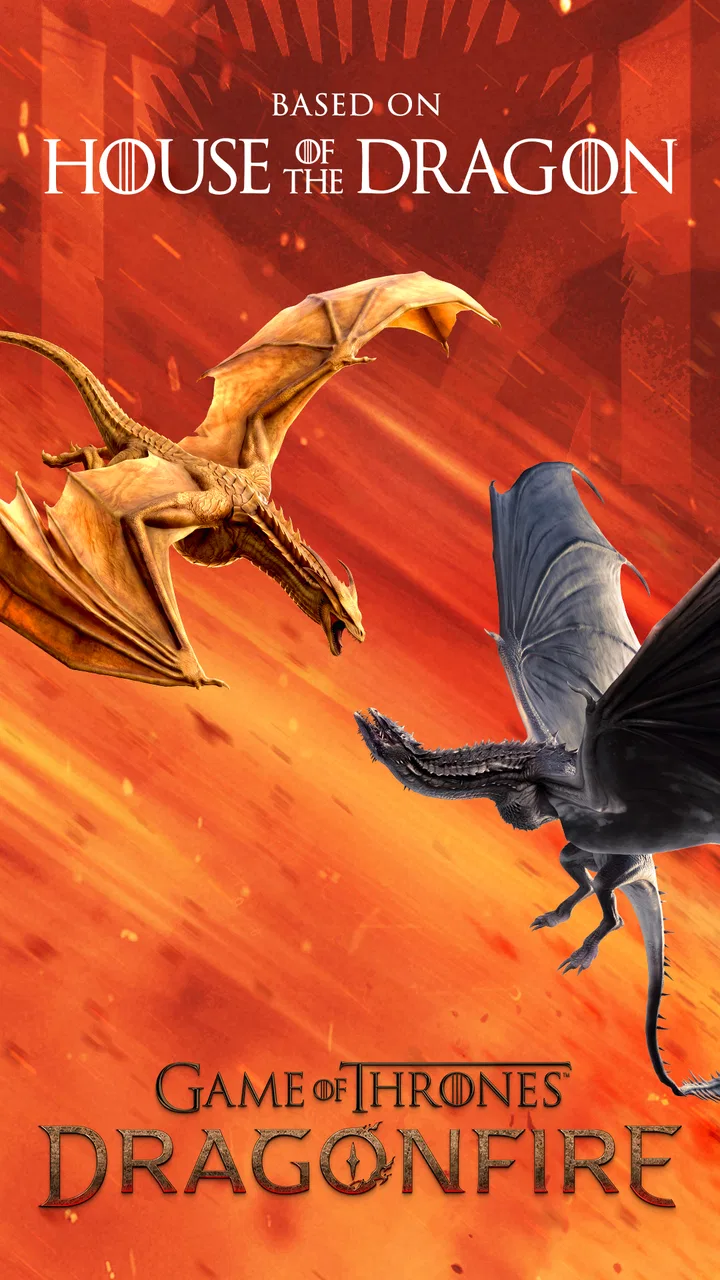
Game of Thrones: Dragonfire
- 4.6
- Rating
- 1.00M
- Installs
- Free
- Price

 Analysis by App-foxy
Commanding dragons is the central promise of Game of Thrones: Dragonfire, but what makes that promise interesting is the way it changes ordinary strategy decisions. Instead of treating a dragon as a decorative reward or a simple attack button, the game places it at the heart of your plans for taking the Iron Throne. I found that this gives each decision more weight: the right moment to commit a dragon can rescue an attack, while using one too early can leave the rest of the plan feeling exposed.
This is a free strategy game from Warner Bros. International Enterprises, built for players who enjoy the political atmosphere and recognizable world of Game of Thrones but still want an active mobile game rather than a passive collection screen. It is rated Teen, so its tone is aimed at older players and families should keep that in mind before installing it. The game has passed one million installs and holds a 4.7 average from roughly 6,300 ratings, which suggests that its basic approach has connected with a sizeable audience.
I would not describe it as a lightweight game for filling a few seconds with random taps. Its strongest moments come when I slow down, look at the situation, and decide how the dragon fits into a broader attack. That focus makes it more satisfying than many quick strategy alternatives, although it also means that anyone looking for a completely relaxed, no-pressure experience may find the structure demanding.
You May Also Like

 Blood Strike: 2.5 Anniversary
Blood Strike’s Loadouts Turn Every Drop Into a Tactical Gamble
A close look at Blood Strike’s custom loadouts: how fast access to signature weapons reshapes its battle royale rhythm, rewards preparation, and narrows the gap between fights.

 Pandora - Music & Podcasts
Pandora’s Music Is Easy to Start, but Harder to Recover
Pandora’s strength is its low-effort path from a seed to a station. Its weak spot is how much confidence it asks you to place in connection, setup, and quiet recovery.

 8 Ball Pool
 Is Built on Rivalries, Rematches, and Routine
A close look at the rivalries, rematches, shared routines, and unanswered safety questions that turn a quick pool match into a persistent mobile community.

 Samsung Music
’s Quiet Strength Is Playing What You Already Own
Its reach comes less from spectacle than from dependable access to a personal library. That simplicity is both the app’s strongest retention engine and its ceiling.

 AccuWeather: Weather Radar
AccuWeather Review: A Quick, Clear Forecast for Everyday Decisions
For everyday plans, the best forecast is the one you can understand quickly. AccuWeather makes rain timing, radar, and local conditions easy to act on, with a few trade-offs.

 Hill Climb Racing
Why Hill Climb Racing Still Turns Crashes Into One More Run
A tiny car, a bumpy hill and one more upgrade: Hill Climb Racing keeps resurfacing because its simple chaos makes every near-miss feel personal.
More From Our News Desk



Why the dragon command matters more than a visual gimmick
The most important capability here is direct dragon command. That sounds simple, but it changes how I read the battlefield. In a typical mobile strategy game, a powerful unit can become an automatic answer to every difficult encounter. Dragonfire works best when the dragon feels like a limited tactical advantage instead: something I need to place into a plan rather than press whenever the opposition looks inconvenient.
That distinction creates a useful rhythm. I first consider the target and the shape of the attack, then decide whether the dragon should lead, support, or be held back. The dragon is most valuable when it solves a specific problem, such as opening a path through a stubborn defense or turning a narrow opportunity into a decisive push. The result is a game that rewards anticipation more than frantic reaction.
The real strength is not simply having a dragon; it is making dragon timing the center of the decision. That is the part I would explain to a friend before recommending the game. If you only want a famous character or creature to appear on screen, the appeal may wear thin. If you enjoy asking when a powerful tool will have the greatest effect, the central idea has much more staying power.
This also gives the game a clear identity within the strategy category. Many mobile strategy games lean heavily on expanding a base, collecting materials, or improving a long list of units. Those activities can be enjoyable, but they sometimes make the player feel as though progress is happening in menus rather than through decisions. Here, the dragon gives the strategy a visible focal point. I always know what the big question is: how can I use this force without wasting the opportunity?
What commanding a dragon feels like in practice
In my experience, the best way to approach a battle is to resist the urge to begin with the most dramatic action. I look at the situation first and identify the part of the attack that is most likely to fail. That may be the strongest defense, the point where my forces could lose momentum, or the area that must be controlled before the rest of the plan makes sense. Once I have that in mind, the dragon becomes a solution to a defined problem instead of a button I press because it is available.
This makes the game more approachable for players who like strategy but do not want a complicated spreadsheet of systems. The key lesson is easy to understand: use the dragon where its impact changes the result. Mastering that lesson is harder, because the tempting move is often to spend the advantage immediately. I found that waiting for a better opening usually produced a more satisfying outcome than chasing the fastest possible attack.
The capability also affects how I recover from mistakes. A failed plan does not always mean the entire session was pointless. Sometimes the problem is not that the dragon was weak, but that I used it against the wrong target or at the wrong stage. That makes replay and adjustment more meaningful. I can change the timing of the dragon command rather than simply repeat the same sequence and hope for a different result.
There is a practical benefit for mobile play here. The central decision is easy to remember when I return to the game after a break. I do not need to reconstruct every detail before understanding the immediate question. I can focus on the current objective and ask where the dragon will make the greatest difference. That makes it more welcoming than strategy games that bury their main idea beneath a dense collection of upgrade screens.
A realistic evening session
Imagine that I have a short break after work and want something more engaging than an idle game. I open Dragonfire, review the next challenge, and notice that the obvious route is heavily protected. My first instinct is to send the dragon straight at the most impressive obstacle. Instead, I consider whether that defense is actually the reason the attack will fail. If a smaller position is controlling access to the rest of the battlefield, using the dragon there may create a better chain of decisions.
That kind of session can stay focused because the dragon gives me a clear point of analysis. I am not merely tapping through an encounter while waiting for a timer. I am making a choice, seeing its consequences, and learning what the battlefield was asking me to notice. If the attempt goes badly, I have a concrete adjustment for the next try: preserve the dragon longer, redirect it, or build the attack around a different opening.
The game is especially suitable for someone who enjoys short strategy sessions that still feel purposeful. It is less suitable for a player who wants to play with no attention at all. The dragon’s value depends on judgment, so background play can make the experience feel flatter. I would choose a simpler casual game if my main goal were to relax without thinking about timing or priorities.
How it compares with familiar mobile strategy games
Compared with base-building strategy games, Dragonfire puts more emphasis on the immediate tactical decision. A traditional builder may be better for someone who enjoys arranging production, planning long-term upgrades, and watching a settlement grow over a long period. Dragonfire’s dragon-command focus is more direct. It asks me to think about the current attack and the best use of a powerful asset.
Compared with character-collection games, it also feels less dependent on the excitement of assembling a large roster. The appeal is not only discovering another recognizable figure. The dragon is valuable because of how it changes the situation in front of me. Players who prefer collecting, customizing, and comparing many heroes may find other games more rewarding, while players who want one clear strategic centerpiece may appreciate the sharper focus here.
It is also different from purely automatic strategy games. If a game handles nearly every important decision for me, the spectacle may be pleasant but the sense of ownership is limited. Dragonfire works better when I actively consider the dragon’s role. That does not make every moment equally deep, but it gives victories a more personal quality because I can connect them to a choice I made rather than simply to a stronger numerical setup.
The Game of Thrones setting helps the concept, but it should not be the only reason to install it. A fan may enjoy the atmosphere and the idea of fighting for the Iron Throne, yet the game still needs to work for someone who wants an actual strategy experience. In my view, it does when the dragon is treated as a tactical tool. If the setting is all you want, a different type of licensed game may be a better fit.
Where the design creates friction
The same focused capability that gives the game its identity can also narrow the experience. Once I understand that the dragon is the main strategic question, some encounters may feel less varied if they do not ask me to rethink that question. The game is strongest when the battlefield makes me reconsider timing, target choice, or the order of an attack. When it does not, the experience risks becoming a familiar routine.
There is also a natural temptation to rely too heavily on the dragon. A powerful unit can make weaker planning look successful for a while, but that habit can limit improvement. I found it more useful to treat the dragon as a correction or a decisive push, not as a replacement for thinking about the rest of the attack. New players should learn this early, because using the dragon for every problem can hide the reason a plan is failing.
Free access makes trying the game easy, but optional purchases range from $0.99 to $199.99 per item. That broad range is important to consider before playing seriously. I would approach the game with a personal spending limit and decide in advance whether I am comfortable playing without purchases. The free entry point is appealing, but the presence of high-priced items means the game is not equally comfortable for every budget.
The Teen rating is another practical consideration. I would not hand it to a young child simply because it is available on a phone or tablet. The connection to Game of Thrones signals a more mature fantasy setting, and parents should make their own decision about whether that tone suits the player. For older fans and strategy-minded teenagers, the rating is less of a concern than the game’s purchase structure and the amount of attention it demands.
Device compatibility is relatively broad because the minimum operating system is Android 7.1. The current version is 26.5.52962, so I would keep the app updated when possible to avoid missing improvements or compatibility fixes. That said, operating-system support alone does not tell me how every older device will feel during play. Anyone using an aging phone should judge the experience on that particular device rather than assuming that a supported system guarantees perfect performance.
Small habits that improve the experience
My first practical tip is to identify the failure point before choosing the dragon’s role. Do not ask, “Where can I cause the most visual damage?” Ask, “What part of this plan is preventing the attack from working?” This change in wording is surprisingly useful. It shifts attention from spectacle to outcome and often reveals a less obvious but more valuable target.
Second, I recommend treating an early attempt as information gathering rather than a demand for immediate victory. Watch what happens when the dragon is held back and notice which defense or route becomes decisive. A failed attack can show whether the problem was timing, positioning, or an overly ambitious objective. This is more productive than spending the dragon immediately and learning only that the screen became busier.
Third, I would avoid making purchases during a frustrating session. Because the game is free to start and includes items across a wide price range, it is easy to confuse impatience with a genuine need for help. I prefer to stop, reconsider the attack, and return later before spending anything. That approach protects the strategic part of the game, since solving a tactical problem is more satisfying than paying to make it disappear.
Finally, I would play it in sessions where I can give the battle some attention. The dragon-command mechanic is wasted if I am constantly distracted or trying to play with one hand while doing something else. A short, focused session is better than a longer distracted one. This is one of the clearest differences between Dragonfire and a passive strategy title that can run in the background.
Who will get the most from it
The best audience is a Game of Thrones fan who also enjoys making tactical choices. The setting provides the emotional hook, while the dragon gives the game a practical reason to keep playing. I can recommend it to someone who likes the idea of commanding a signature force but still wants victories to depend on judgment rather than only on collecting stronger content.
It is also a good option for a player moving from casual puzzle games into strategy. The dragon creates an understandable entry point, and the basic lesson about timing can be applied immediately. At the same time, the decision is not so shallow that experienced strategy players have nothing to consider. The game’s value depends on how well its encounters continue to make that central capability meaningful.
I would be more cautious about recommending it to players who dislike licensed settings, in-app purchases, or games that ask them to repeat an encounter and adjust their approach. Someone wanting a fully offline-feeling experience, a deep city simulator, or a purely collection-driven game may be happier elsewhere. Dragonfire is not trying to be all of those things, and its focused design is both its advantage and its limitation.
The game is free, so trying it carries less commitment than buying a premium strategy title. Still, I would not judge it after only a few taps. Its appeal becomes clearer once I stop treating the dragon as a guaranteed win and start using it to shape the attack. That is when the difference between a flashy licensed game and a genuinely engaging strategy game begins to show.
My final recommendation
After spending time with Game of Thrones: Dragonfire, I see it as a focused strategy game built around one strong idea: dragons matter most when I command them with purpose. The concept is easy to understand, but it rewards better judgment than the store summary alone suggests. I enjoyed the moments when a careful decision about timing turned a difficult attack into a manageable one.
It is not flawless. The focused structure can feel repetitive when encounters do not challenge the central decision, and the range of in-app purchase prices means budget-conscious players should approach it carefully. The Teen rating also makes it a poor automatic choice for younger children. These are not reasons to dismiss the game, but they are important parts of deciding whether it belongs on your device.
For me, the recommendation is straightforward: install it if you want a free Game of Thrones strategy experience where the dragon is more than decoration, and where you enjoy learning from a badly timed move. Skip it if you want a quiet idle game, a pure base builder, or a collection game with little tactical involvement. Its strongest feature is also its clearest test, and players who enjoy that test will find a distinctive mobile battle experience here.
FAQs for Game of Thrones: Dragonfire
01What is Game of Thrones: Dragonfire about?
Game of Thrones: Dragonfire is an immersive strategy game set in the rich universe of George R.R. Martin's epic saga. Players can build their own kingdom, forge alliances, and raise dragons to dominate the Seven Kingdoms. The game combines elements of resource management and tactical combat, offering a unique experience for fans of the series.
02Does Game of Thrones: Dragonfire require an internet connection?
Yes, Game of Thrones: Dragonfire requires a stable internet connection to play. The game features real-time multiplayer interactions, allowing you to join alliances and compete against other players globally. This connectivity is essential for syncing game progress and accessing new content updates.
03Is Game of Thrones: Dragonfire free to play?
Game of Thrones: Dragonfire is free to download and play, but it includes in-app purchases. Players can buy items, resources, and special packs to enhance their gameplay experience. While it's possible to enjoy the game without spending money, these purchases can provide advantages and expedite progress.
04What kind of devices are compatible with Game of Thrones: Dragonfire?
Game of Thrones: Dragonfire is available on both Android and iOS platforms. It supports most modern smartphones and tablets, but it's recommended to check the app store listing for specific device compatibility and required operating system versions to ensure optimal performance.
05How does the game handle player data and privacy?
Game of Thrones: Dragonfire collects data to enhance gameplay and provide personalized experiences. The game adheres to strict privacy policies, ensuring data protection and security. Players can review the privacy policy within the app for detailed information about data usage, storage, and sharing practices.
Pros
- Stunning graphics bring Westeros to life.
- Engaging storyline with unexpected twists.
- Diverse character roster from the series.
- Strategic gameplay keeps you hooked.
- Frequent updates with new challenges.
Cons
- In-app purchases can be expensive.
- Requires a stable internet connection.
- Loading times can be lengthy.
- Limited offline gameplay options.
- Some features locked behind paywalls.

Game of Thrones: Dragonfire
Gallery